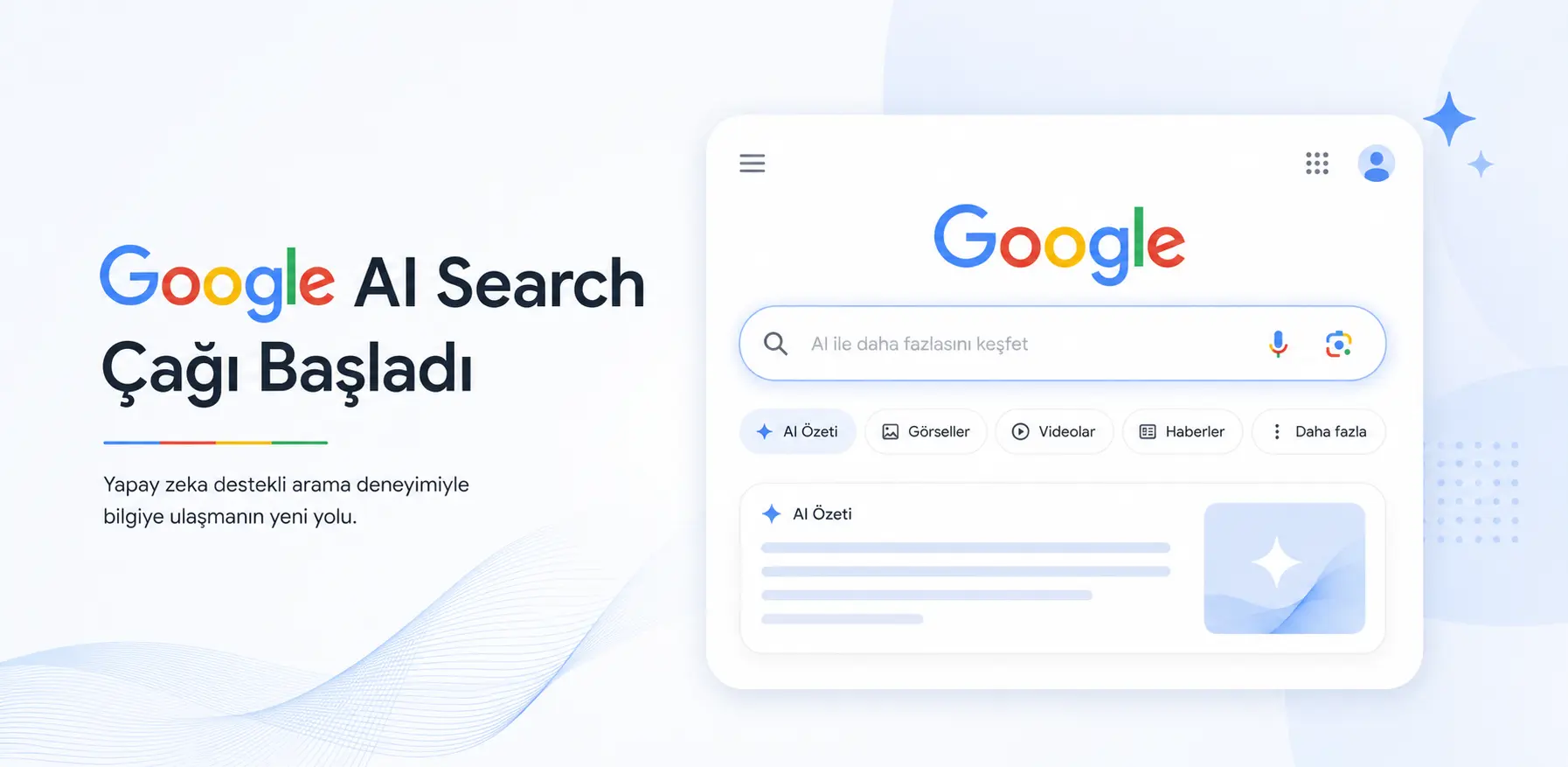
Our internet usage habits are undergoing a profound change. For years, we typed keywords like "red sneakers" or "what is SEO" into search bars and clicked on one of the 10 blue links that appeared. Today, however, with the advent of ChatGPT, Gemini, Perplexity, and Google’s AI Overviews (SGE), the rules of the game have changed. We no longer just want links; we want direct "answers." This is where AEO (Answer Engine Optimization) comes into play.
So, how should you optimize your content in this new era dominated by artificial intelligence algorithms? Is traditional SEO dead, or has it simply evolved? In this article, we will examine the concept of AEO in depth and provide a step-by-step guide to preparing your brand for an AI-focused future.
What is AEO (Answer Engine Optimization)?
AEO is the process of optimizing your content to be selected as the direct answer to a user's query by AI assistants (Siri, Alexa, Google Assistant) and AI-based search engines (ChatGPT, Bing Chat).
While traditional SEO focuses on moving your website to the top of the Search Engine Results Page (SERP), AEO focuses on being the answer itself. The goal is to provide the most authoritative and concise response to the user's question, often without them needing to visit a website.
The Fundamental Difference Between SEO and AEO
Think of SEO as a librarian who helps you find the best book in the library. AEO is like an assistant who reads the relevant paragraph in that book and summarizes it for you. This shift forces content creators to move their strategies from "keyword stuffing" to "contextual authority."
How Search Behavior is Changing in the AI Era
Users are no longer using robotic keywords. Instead, they are talking to their devices or chatting with bots.
- Queries are Getting Longer: Instead of "Italian restaurant," queries are becoming intent-driven long-tail phrases like, "What is the best Italian restaurant in London that is quiet and has gluten-free options for a date?"
- Conversational Searches: Users follow up after receiving an answer, asking, "What are their prices?" AEO favors content that can maintain this context.
- Rise of Zero-Click Searches: Since users get the answer directly on the search results page, click-through rates (CTR) are declining. However, being cited as the "source" in AEO is still vital for brand awareness and high-quality traffic.
Strategies to Drive Traffic with AEO
AI models look for specific patterns and structural integrity when scanning information. To become a favorite of the algorithms and drive traffic, you should implement these core strategies:
1. Question-and-Answer Oriented Content Structure
Your content should provide clear, direct, and straightforward answers to the questions in users' minds. Google’s "Featured Snippet" areas are the cornerstone of AEO.
The "Answer Paragraph" Technique
Include a clear paragraph summarizing the answer to the primary question in 40–60 words, either in the introduction or immediately under the relevant H2 heading. This makes it easy for AI bots to extract the answer and present it to the user.
2. Semantic HTML and Structured Data (Schema Markup)
Artificial intelligence looks at the code structure to understand what the content is about. Your site needs to be "machine-readable."
- Using Schema.org: Use Article, FAQ, Product, or How-to schemas to tell search engines exactly what each piece of content represents.
- Hierarchical Order: Use H1, H2, and H3 tags in a logical sequence. This allows AI to understand the skeleton of your content.
3. Authority and Trust: E-E-A-T Criteria
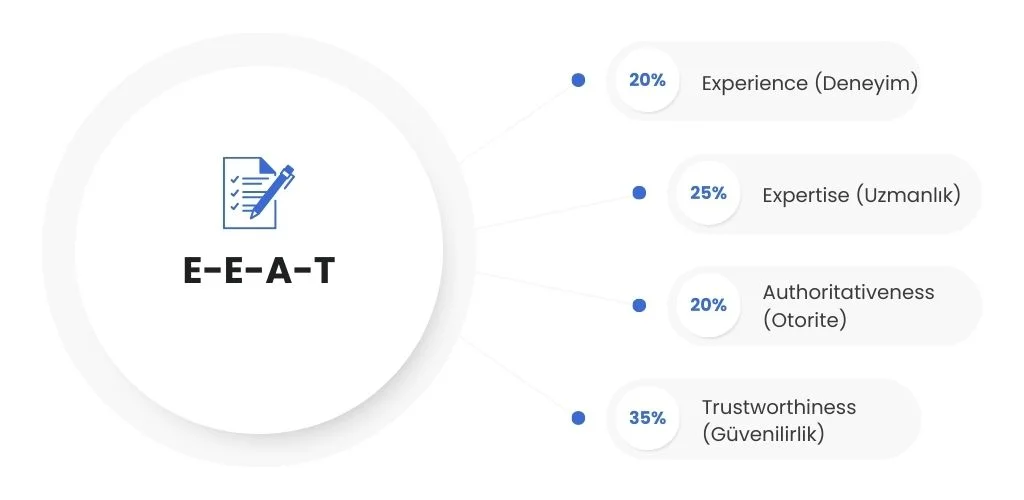
AI models want to reference reliable sources to reduce the risk of "hallucinations" (generating false information). Google’s E-E-A-T (Experience, Expertise, Authoritativeness, Trustworthiness) criteria are more important than ever for AEO.
- Author Identity: Who wrote the content and their expertise in that field must be clearly stated.
- Citing Sources: Support your claims with scientific data or external links to authoritative sites.
- Brand Mentions: Your brand being discussed elsewhere on the internet (social media, news sites, forums) helps AI recognize you as an "entity."
4. Conversational Language and Natural Flow
Voice assistants and chatbots prefer natural, conversational language over formal and robotic tones. Frame your content as if you are explaining a topic to a friend. Do not hesitate to use pronouns like "I," "We," and "You."
Traditional SEO vs. AEO Comparison
Understanding the difference between these two disciplines will help you build the right strategy. Here are the key differences:
| Feature | Traditional SEO | AEO (Answer Engine Optimization) |
|---|---|---|
| Focus | Ranking | Being the Answer |
| Keywords | Short, target keywords | Long-tail, question-based sentences |
| Target Platform | Desktop and Mobile Browsers | Voice Assistants, Chatbots, AI Overviews |
| Success Metric | Click-Through Rate (CTR), Dwell Time | Visibility, Brand Awareness, Citations |
| Content Structure | Long, detailed articles | Summarized, structured, snippet-friendly |
| User Intent | Research and Browsing | Quick Information and Action |
What Should Future Content Formats Look Like?
In the age of AI, providing information is not enough; you must present it in the most processable format.
The Power of Lists and Tables
AI loves to categorize data. Presenting complex information in bullet points or tables—rather than long paragraphs—increases the likelihood that an AI will pick up that information and present it to a user.
In-depth and Original Analysis
AI is great at compiling and presenting existing information. However, it is not (yet) as good as humans at producing something "new." To drive traffic, do what AI cannot:
- Publish your own Case Studies.
- Incorporate personal experiences and unique insights.
- Conduct original industry research and surveys.
AI will be forced to cite your original data as a source. This returns to you as high-quality, authoritative traffic.
Conclusion: AEO is a Necessity, Not an Option
The digital world is transforming from a catalog of links into a massive brain that answers questions. AEO is the key to existing in this new ecosystem. By focusing on user problems, questions, and intents—and by making your content understandable for both humans and machines—you can stay ahead in this race.
Remember, the goal is not just to be read by AI, but to be recommended by AI. By turning your brand into an information authority, you can protect your traffic and reputation even in a zero-click world.