Agentic UX and the Era of Websites That Know You Has Begun
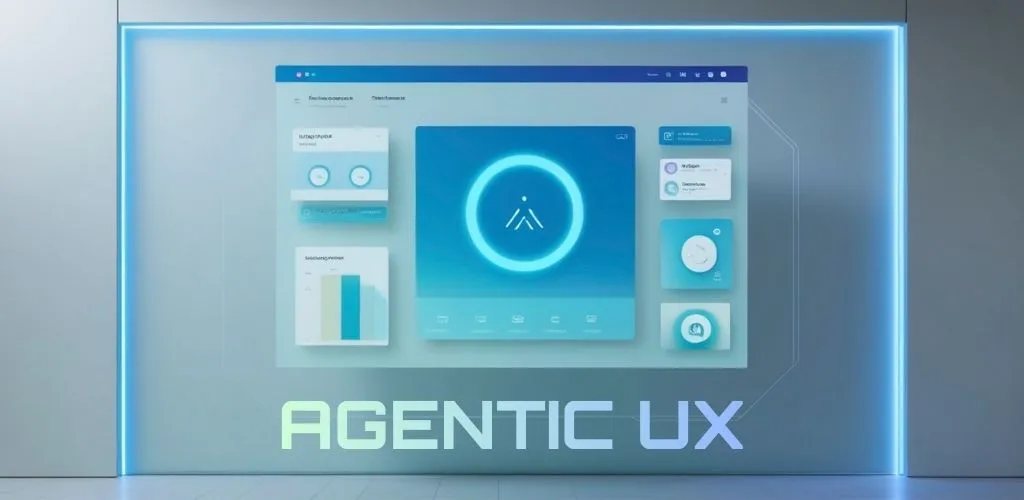
The internet world is undergoing a massive transformation. Until today, we always followed the same logic when designing websites: We created menus, placed buttons, and "waited" for the user to find what they were looking for. However, the rules of the game have changed. We have now entered the era of "Agentic UX," where users no longer get lost in menus, but websites guide the user and even take action on their behalf.
The difference between an ordinary website and a platform that truly "knows" you is like the difference between a library catalog and a personal assistant. At Webmarka, we examine this major break in the digital world and its effects on your business in detail.
What is Agentic UX? Why Are We Talking About It Now?
"Agentic UX" (Agent-Based User Experience) is a new design philosophy that emerges with the integration of artificial intelligence agents into web interfaces. Traditional UX (User Experience) focuses on making it easier for the user to use a tool. Agentic UX, on the other hand, builds intelligent systems that manage the tool themselves to achieve the user's goal.
In the past, a user would enter an e-commerce site, set filters, browse five different pages, and make a decision. In a system using Agentic UX, the user simply says, "Suggest something similar to the coffee I bought last month but with a smoother taste." The system (AI Agent) analyzes the user's past data, checks stock status, and brings the most suitable product directly in front of the user. It even presents a "Confirm Purchase" button because it knows payment and shipping preferences.
This technology is not just a "chatbot" or a simple recommendation engine. The interface itself shapeshifts instantly according to the user's intent.
The End of Static Websites and Dynamic Flows
Classic websites show the same face to everyone. Your homepage is the same for a university student in Istanbul and a businessman in Berlin. This approach is now inefficient. Agentic UX throws the "One design for all" logic into the trash.
Websites that know you read intent based on browser history, on-site behavior, and even current mouse movements. If your visitor enters your site for the third time and constantly looks at the "Pricing" page, the system no longer shows them the "About Us" text. Instead, it offers a direct sales-oriented interface by saying, "We have a special offer for you."
Differences Between Traditional UX and Agentic UX
To help you understand this transformation more clearly, we compared the main differences between the two approaches in the table below:
| Feature | Traditional UX (Old Generation) | Agentic UX (New Generation) |
|---|---|---|
| Interaction Model | User searches, clicks, finds. (Passive) | System suggests, retrieves, executes. (Active) |
| Personalization | Static grouping (e.g., Only changes language). | Hyper-Personalization (Changes based on instant intent). |
| Interface Structure | Fixed menus and hierarchy. | Fluid structure that shapes around intent. |
| User Load | Cognitive load is on the user. | AI takes on the cognitive load. |
| Success Criteria | Time spent on page. | Task completion speed and success. |
A Huge Opportunity for Businesses: Multiplying Conversion Rates
Why should you, as business owners, care about this technology? The answer is very simple: Speed and Convenience.
Users are lazy and impatient. The fewer clicks they make to perform a transaction, the more likely they are to complete that transaction. Agentic UX eliminates friction.
- Predicts Intent in Advance: When your customer starts searching for the word "Return," the system does not direct them to the FAQ page. It opens a window containing their last order and a "Return" button directly.
- Shortens the Sales Funnel: While your potential customer examines your services, artificial intelligence understands which sector they belong to and highlights success stories belonging only to that sector in the references section.
- Increases Loyalty: When the user feels that your site "remembers" and "understands" them, they develop an emotional bond with your brand.
Through Webmarka's Eyes: How Will Future Web Architecture Look?
As Webmarka.com, we closely follow this change in the software and design world. Future websites will not consist only of HTML and CSS codes. LLMs (Large Language Models) and vector databases working in the background will serve as the brain of the site.
You will stop asking "Where should we put the menu?" when designing your website. Instead, you will focus on the question, "How does our artificial intelligence assistant solve the customer's problem fastest?"
For example, if you are developing a SaaS (Software as a Service) project, your dashboard screen should not remain static. You must build systems that automatically move campaign data to the main screen when a marketing manager logs in, or invoice summaries when an accounting manager logs in. This requires strategic intelligence beyond coding.
How Do You Switch to a Website That Knows You?
Switching to this technology might look scary, but the steps are quite clear:
- Strengthen Your Data Infrastructure: Processing user data correctly (within permitted and legal frameworks) is the foundation of Agentic UX.
- Use Dynamic Components: Build structures that can change content without refreshing the page using modern technologies like React, Vue, or Laravel Livewire.
- Artificial Intelligence Integration: Develop mechanisms that make sense of user inputs by connecting OpenAI, Anthropic, or open-source models to your system via API.
Conclusion: Those Who Act, Not Wait, Will Win
The web world has ceased to be the digital version of static brochures. Users want "smart" platforms that talk to them, understand them, and make their work easier. Agentic UX is becoming the standard of the near future, not a luxury.
While your competitors watch users get lost among menus, you can possess a technology that rolls out the red carpet in front of your customer. The time has come to position your website not just as a showcase, but as your best sales representative.
Continue to follow Webmarka content to prepare your digital assets for this new era and catch the latest trends in web technologies. The future hides inside codes that know you.