The Core Focus of 2026: Human Experience and Semantic Depth
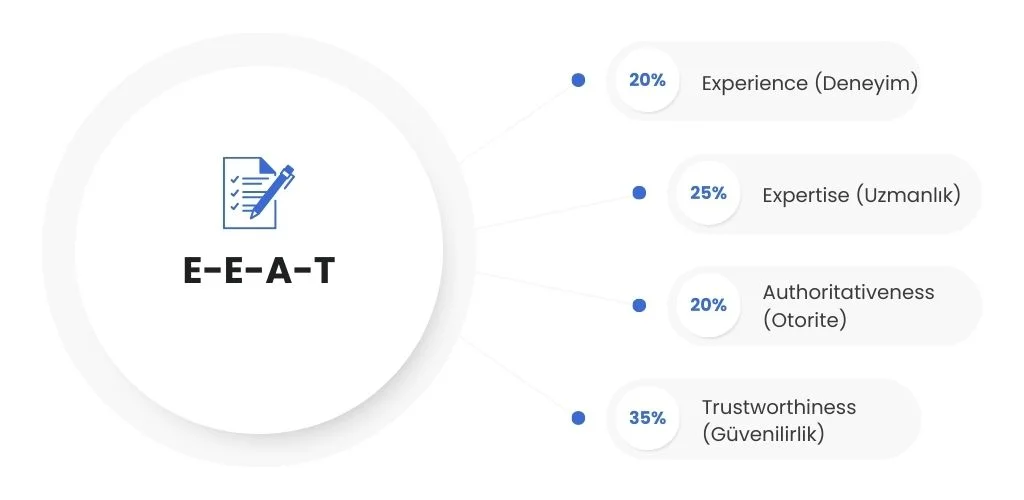
The 2026 update marks the peak of Google’s ability to distinguish between "information" and "insight." With the integration of advanced neural networks, Google now prioritizes the E-E-A-T (Experience, Expertise, Authoritativeness, and Trustworthiness) framework more aggressively than ever before.
1. The "Human-in-the-Loop" Necessity
Purely AI-generated content—without human editorial oversight—is seeing a massive decline in rankings. Google’s 2026 algorithm specifically looks for "Information Gain." If your article simply repeats what is already on the web, it is flagged as redundant. To rank, content must provide a unique perspective, original data, or first-hand experience.
2. Advanced Intent Matching
Keywords have evolved into "entities." The 2026 update focuses on Semantic Context. Google’s AI now understands the nuances of a user's journey. For instance, if a user searches for "sustainable investing," the algorithm evaluates whether the site provides actionable financial advice (YMYL) or just generic definitions, rewarding the former only if the source has verified authority.
Critical Impacts on Websites: A Sectoral Analysis
The impact of the 2026 Core Update is not uniform. While some niches remain stable, high-stakes sectors like finance, health, and e-commerce are facing strict scrutiny.
The Rise of Zero-Click Searches and SGE
With the full rollout of Search Generative Experience (SGE), Google now answers a significant portion of queries directly on the SERP. Websites that rely on "definition-based" traffic (e.g., "What is...?") have seen a 30-40% drop in click-through rates. Success in 2026 requires targeting "complex-intent" queries that AI summaries cannot fully satisfy.
Performance Breakdown: 2026 SEO Metrics
The following table summarizes how different website elements are performing under the new algorithm:
| Content/Technical Element | Impact Level | 2026 SEO Status |
|---|---|---|
| User Interaction (INP) | Critical | High latency leads to immediate de-ranking. |
| Generic AI Content | Highly Negative | De-indexing or significant loss in visibility. |
| Original Research/Data | Highly Positive | Rewarded with "Featured Snippets" and SGE citations. |
| Structured Data (Schema) | High | Essential for appearing in AI-powered summaries. |
| Author Authority | Critical | Unverified authors result in lower trust scores. |
Technical SEO: Core Web Vitals 2026 Standards
Technical excellence is no longer a "bonus"—it is a prerequisite. In 2026, Google’s bots are faster and more ruthless regarding site performance.
Interaction to Next Paint (INP) as a Primary Signal
The transition from FID to INP (Interaction to Next Paint) is complete. Google now measures the time it takes for a page to respond to every interaction a user makes. Sites with heavy JavaScript execution or slow-loading interactive elements are seeing their mobile rankings plummet.
Digital Accessibility and Semantic HTML
Accessibility is now a core ranking factor. Following the 2025 European Accessibility Act and similar global regulations, Google’s 2026 update rewards sites that use proper Semantic HTML (tags like <article>, <section>, <nav>) and provide a seamless experience for users with screen readers.
Strategies for Recovery and Growth in 2026
If your website has seen a decline in traffic following the January 2026 update, a systematic approach to recovery is required.
Step 1: Content Pruning and Consolidation
Audit your site for "Thin Content." In 2026, having 100 high-quality pages is far better than having 1,000 mediocre ones. Consolidate overlapping articles into "Ultimate Guides" that cover a topic with 360-degree depth.
Step 2: Strengthening E-E-A-T Signals
- Verified Authorship: Connect your writers' profiles to their LinkedIn, Twitter (X), and professional portfolios.
- Cite Sources: Link to high-authority peer-reviewed journals or official government data.
- Case Studies: Include real-world examples and "lessons learned" to prove first-hand experience.
Step 3: Optimizing for AI Citations
To be the source that Google's AI cites in its summaries:
- Use clear, concise headings (H2, H3).
- Incorporate FAQ Schema to answer direct questions.
- Provide "TL;DR" (Too Long; Didn't Read) summaries at the beginning of long-form content.
Conclusion: The Path Forward in 2026
The Google 2026 Core Algorithm Update is a clear message: the era of "gaming the system" is over. Google is now an "Experience Engine" rather than a "Search Engine." To thrive, webmasters must pivot away from high-volume, low-quality content production and focus on building a brand that users—and algorithms—can trust.
Sustainability in 2026 SEO is built on the pillars of technical speed, verifiable expertise, and genuine value.