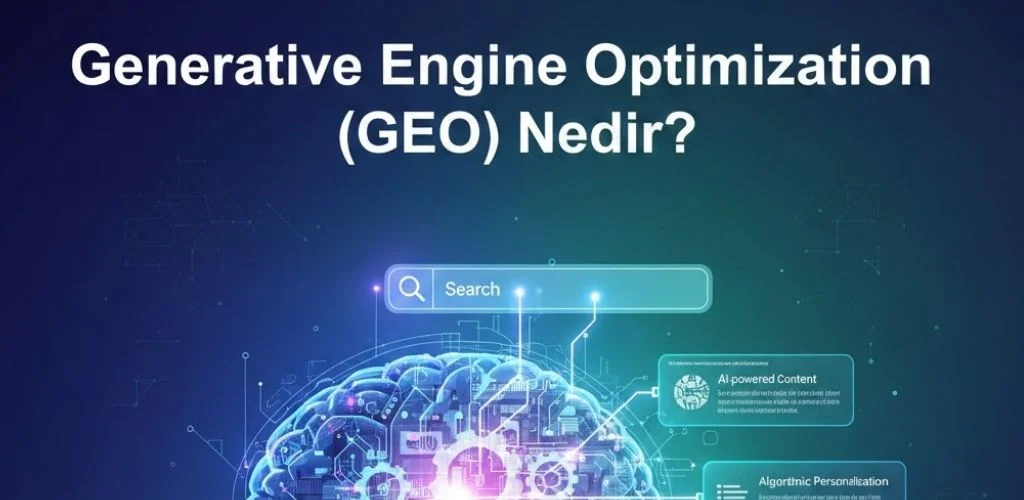
Generative Engine Optimization (GEO) is the process of optimizing content so that it can be more easily crawled, understood, and presented as a "source" in the responses generated by Generative AI engines.
While the goal of traditional SEO is to move your website to the top of a Search Engine Results Page (SERP), the primary goal of GEO is to ensure your brand is included as a point of reference within the synthesized answer created by AI. In 2026, the concept of "ranking" has been replaced by the concept of "being a trusted source for the AI assistant."
Core Differences Between SEO and GEO
The biggest difference between traditional SEO and GEO lies in the identity of the target audience. While SEO attempts to persuade search engine algorithms (like Googlebot), GEO targets both the LLMs (Large Language Models) and the end-users who consume the direct answers provided by these models.
SEO vs. GEO Comparison Table
| Feature | Traditional SEO | Generative Engine Optimization (GEO) |
|---|---|---|
| Primary Goal | Ranking on the first page of SERPs | Appearing as a source/citation in AI answers |
| User Interaction | Clicking links and visiting the site | Information consumption and brand mentions |
| Content Focus | Keyword density and link building | Contextual depth, data accuracy, and authority |
| Metrics | Click-Through Rate (CTR), Bounce Rate | Citation count, Brand Visibility (AI Sentiment) |
| Technical Focus | Site speed, mobile friendliness, indexing | Schema Markup, Entity building, API compatibility |
Why is GEO Central to Digital Marketing in 2026?
Research conducted in 2026 shows that more than 60% of searches are now answered directly by AI. This has fundamentally changed the structure of organic traffic directed to websites.
- Zero-Click Searches: Since AI provides the answer directly on the screen, users often do not feel the need to visit a website. GEO ensures your brand name is mentioned in that answer, creating "brand recall."
- Credibility and E-E-A-T: To prevent hallucinations, AI models only cite sources that provide high signals of Experience, Expertise, Authoritativeness, and Trustworthiness (E-E-A-T).
- Voice and Dialogue-Based Searches: People no longer search for "best phone." Instead, they use long sentences like, "My budget is $1,000; which phone should I buy for high-quality photography?" GEO adapts to these conversational queries.
4 Essential Techniques for a Successful GEO Strategy
To be visible in AI engines, simply writing text is not enough. You must make the structure of the content "machine-readable and citable."
1. Entity-Based Optimization
AI understands concepts and the relationships between them, not just words. It deduces whether the word "Apple" refers to a fruit or a technology company based on surrounding concepts (Steve Jobs, iPhone, iOS). In your GEO strategy, you must position your brand as an "entity" and strengthen its connection with all relevant terms.
2. Use of Structured Data and Schema Markup
In 2026 algorithms, Schema markups in JSON-LD format are of vital importance. Organization, FAQPage, Product, and Article schemas "whisper" to the AI what your content is about. This allows AI to process your content 40% faster and more accurately.
3. Direct Answer-Oriented Content Structure
AI models prefer clear and modular structures over complex blocks of text.
- TL;DR Summaries: Provide a 2-3 sentence summary at the beginning of your article.
- Q&A Format: Structure your H2 and H3 headings as questions that users actually ask.
- Statistics and Original Data: AI loves to cite unique data and original research.
4. Digital PR and Brand Citations
While backlinks are still important, "unlinked mentions" are a major force in GEO. Having your brand name mentioned on an industry news site sends a signal to AI models that you are an authority.
The Future of GEO: What Awaits You?
The future belongs not to those who "use the most keywords," but to those who "provide the most accurate and reliable information in the most structured way." Brands should focus on becoming a "trusted consultant" for AI assistants rather than just driving traffic.
If you do not integrate your current SEO efforts with GEO, you run a high risk of remaining invisible in the AI-driven search world of 2026.