
The Era of Google AI Search Has Begun: How Artificial Intelligence is Changing Our Search Habits
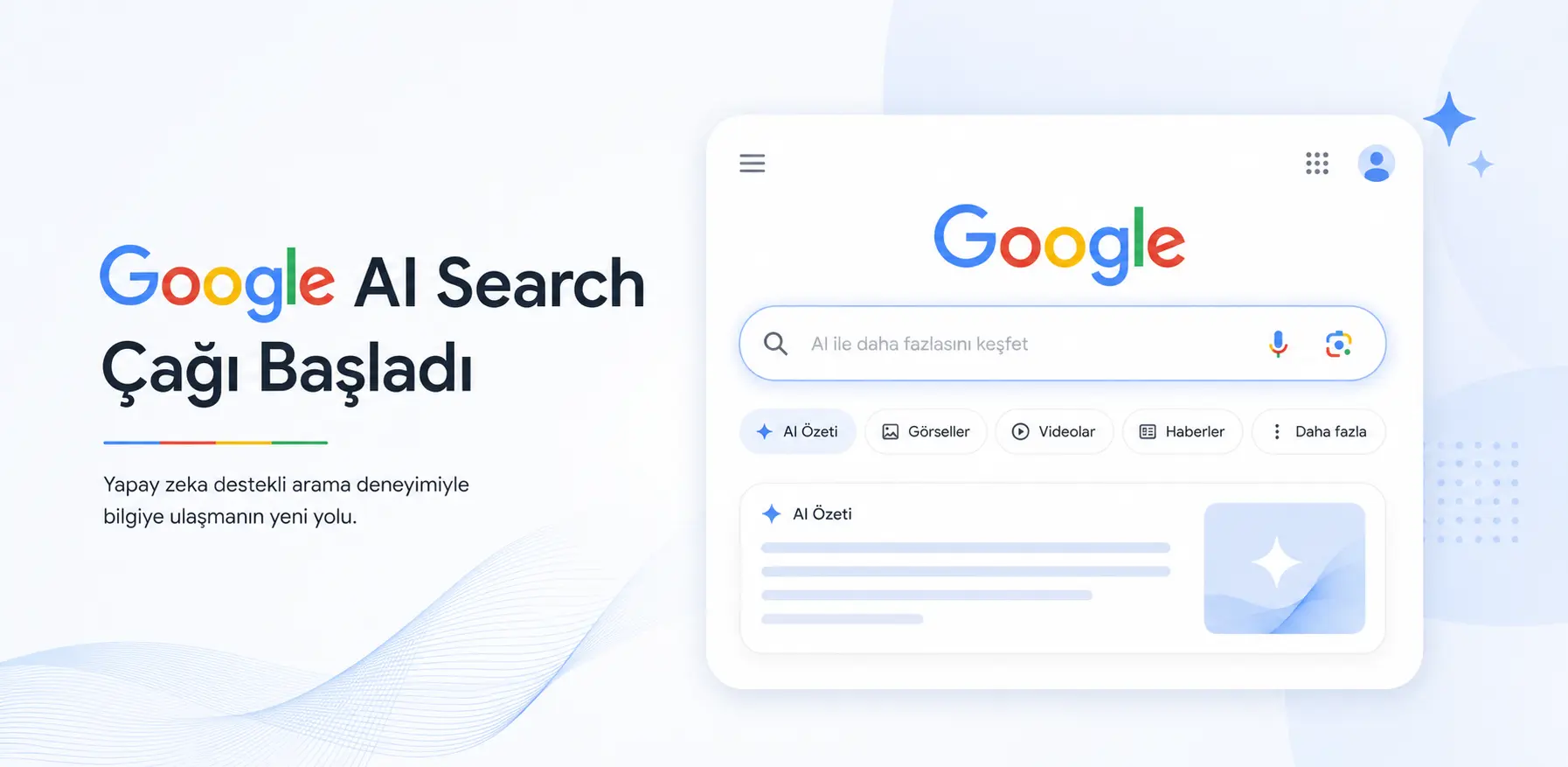
The long-awaited major transformation in the digital world has finally happened: the era of Google AI Search has officially begun. Fundamentally changing how billions of people access information, this innovation does not merely list standard search results; it takes on the role of a dynamic assistant that understands, synthesizes, and directly generates answers to users' questions.
So, how will this new era, which Google calls the Search Generative Experience (SGE), affect web projects, SEO strategies, and digital visibility?
What is Google AI Search (SGE)?
Traditional search engine logic relied on indexing and ranking the most relevant web pages (blue links) that matched the keywords entered by the user. Google AI Search, on the other hand, thanks to powerful large language models (LLM) running in the background, analyzes information obtained from different sources within seconds and presents an original, curated, and contextual answer at the very top of the search engine results page (SERP).
When users ask complex questions now, they no longer have to visit multiple sites and synthesize the information in their own minds. Artificial intelligence pulls the most accurate and up-to-date data, preparing a directly readable summary for the user.
What is Changing in User Experience?
With AI Search, the interaction users have with the search engine is changing completely:
- Conversational Searches: The search bar is no longer just an area for entering short keywords. Users can ask long, contextual, and multi-layered questions, just as if they were talking to a human.
- Faster Information Consumption: The rate of "Zero-Click" searches is increasing rapidly. Since the user finds the answer they are looking for directly in the AI summary, they often do not feel the need to click on a website.
- Personalized Follow-up Questions: The AI creates a seamless research loop by suggesting smart follow-up questions right below the provided answer so the user can dive deeper into the topic.
How Will SEO Strategies Be Affected by This Change?
Although the introduction of Google AI Search has reignited the "Is SEO dead?" debates, the truth is that SEO is not dead; it has simply evolved. Old-generation tactics based purely on keyword stuffing will no longer work. The new metrics to focus on for a successful digital strategy are as follows:
1. Long-Tail Keywords and Semantic SEO
The shift of users towards conversational queries brings long-tail keywords, which contain specific intent, to the forefront instead of short and generic keywords. Contents need to be structured not around keywords, but rather question and intent-focused (Semantic SEO).
2. The Undeniable Superiority of E-E-A-T Criteria
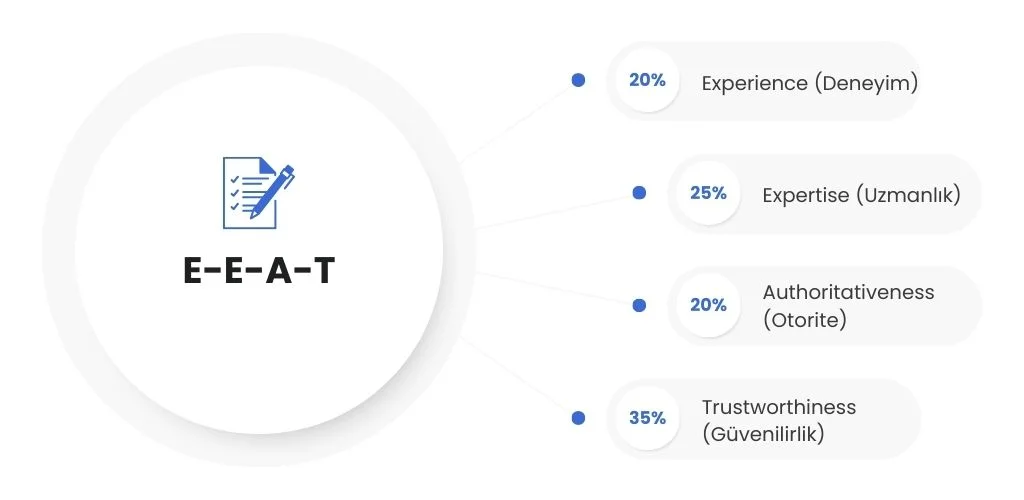
Google's AI needs reliable sources to feed the summaries it generates. Sites that adhere to the principles of Experience, Expertise, Authoritativeness, and Trustworthiness (E-E-A-T), that contain real human experience, and that are considered authorities will increase their chances of being cited as sources in AI summaries.
3. Use of Structured Data
It is now much more critical for search engine bots to flawlessly understand page architecture and content context. Schema markups, the use of JSON-LD, and a clean HTML structure are becoming mandatory for content to be read and synthesized correctly by AI.
What Should Web Agencies and Brands Do?
The steps that need to be taken to avoid losing traffic in this new era and, conversely, to take advantage of the opportunities offered by AI are clear:
- Produce Value-Driven, In-Depth Content: Pages that only offer Wikipedia-like encyclopedic information will be easily sidelined by AI. Focus on content that carries a human touch, includes case studies, is based on personal experiences, and provides sectoral analysis.
- Strengthen the Q&A (FAQ) Format: Create blocks that directly and clearly answer the "How", "What", and "Why" questions on your target audience's mind.
- Technical Excellence: Your site's speed performance, mobile compatibility, and clean code architecture optimize your crawl budget, ensuring your content is discovered faster by the AI.
In conclusion; The Google AI Search era is setting a new standard in the digital world. Instead of clinging to traditional methods, brands that understand the language of AI, focus on user intent, and keep their technical infrastructure strong will be the winners of this new era. Rather than resisting change, it is the perfect time to integrate your system architectures and content strategies into this new structure.