The Silent Revolution: How AI Redefined the Search Landscape
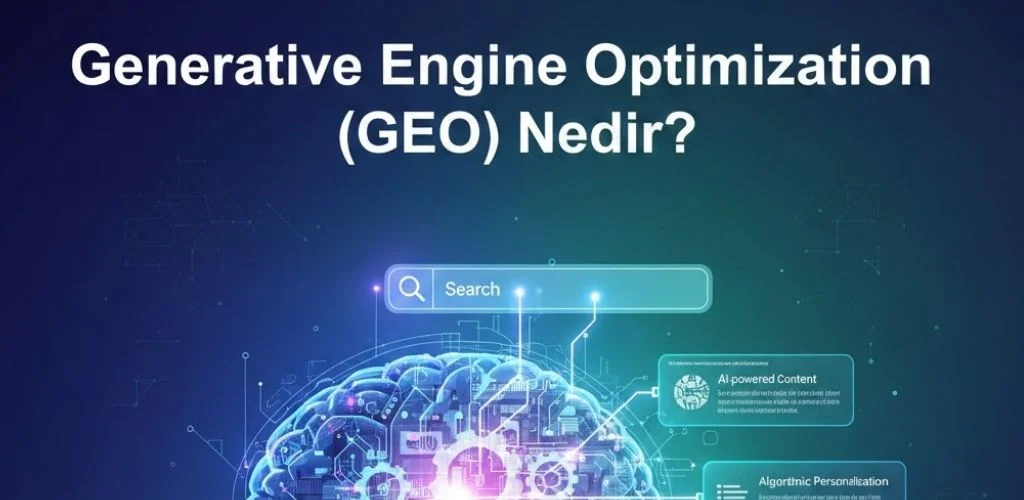
For over two decades, Google Search operated primarily as a sophisticated filing cabinet. Users entered specific keywords, and the engine matched those "strings" to indexed web pages. However, the landscape of digital discovery has undergone a seismic shift. Today, Google is no longer just a search engine; it is a highly intuitive artificial intelligence ecosystem that understands human intent better than ever before.
The integration of AI into Google’s core algorithms has transformed the results page from a simple list of links into a dynamic, multi-modal interface. This evolution has fundamentally changed how users find information and how businesses approach SEO strategy and digital visibility. In this post, we will explore the pivotal AI milestones that have shaped modern search.
The journey from basic keyword matching to semantic understanding has been driven by several key technological leaps:
The Pioneers: RankBrain, BERT, and the Shift to Semantic Search
The first major turning point in Google's AI journey was the introduction of RankBrain in 2015. This machine-learning component helped Google process never-before-seen queries by associating them with similar concepts. It marked the end of the "exact match" era and the beginning of semantic search.
Following RankBrain, the introduction of BERT (Bidirectional Encoder Representations from Transformers) in 2019 revolutionized how Google understands the context of words in a sentence. Instead of looking at words one by one, BERT looks at the entire sentence to grasp the subtle relationship between words like "to" and "for."
"With the introduction of BERT, Google can now understand the context of your query much like a human would, significantly improving the relevance of results for complex, conversational searches."
Key Impacts of BERT and RankBrain
- Understanding Prepositions: Better handling of queries where small words change the entire meaning.
- Long-tail Query Processing: Improved accuracy for specific, conversational questions.
- Reduced Keyword Stuffing: Content is now ranked based on topical depth rather than keyword frequency.
The Rise of the AI Overview: Generative AI in Search
Perhaps the most visible change in recent years is the introduction of AI Overviews (formerly known as SGE). By leveraging large language models (LLMs) like Gemini, Google can now synthesize information from multiple sources to provide a concise summary at the top of the Search Engine Results Page (SERP).
This shift aims to answer complex queries in a single glance, reducing the need for users to click through multiple websites. While this provides a faster user experience, it presents new challenges for digital marketers and content creators who rely on organic traffic.
Comparison: Traditional Search vs. AI-Powered Search
| Aspect | Traditional Search | AI-Powered Search |
|---|---|---|
| Matching Method | Keyword-to-keyword matching | Intent and context understanding |
| Result Type | List of blue links | Synthesized overviews and interactive elements |
| User Interaction | Single query, single response | Conversational, multi-step dialogue |
| Content Focus | Keyword density | E-E-A-T and topical authority |
Multimodal Search: Seeing and Hearing the Web
AI has expanded Google’s capabilities beyond text. With the Multitask Unified Model (MUM), Google can now process information across different formats simultaneously—including text, images, and video. This has led to the rise of multimodal search.
Features like Google Lens and "Circle to Search" allow users to search using their camera or by highlighting elements in a video. This level of AI integration ensures that the search engine can bridge the gap between the physical world and digital information.
"MUM is 1,000 times more powerful than BERT and is capable of understanding information across text and images while simultaneously looking for answers in 75 different languages."
The Impact on SEO: Adapting to the AI Era
For businesses, the AI-driven transformation of Google means that traditional SEO tactics are no longer sufficient. Google’s AI now prioritizes E-E-A-T (Experience, Expertise, Authoritativeness, and Trustworthiness). Content must be written for humans, by humans, or at least demonstrate a high level of unique value that AI cannot easily replicate.
SEO professionals must now focus on entity-based SEO rather than just keywords. This involves building a brand's presence as a recognized authority within a specific niche or "knowledge graph."
The Future of Search: What Comes Next?
As AI continues to evolve, we can expect Google Search to become even more personalized and proactive. We are moving toward a predictive search model where Google anticipates a user's needs based on their habits, location, and past interactions. The integration of AI into mobile operating systems means that search will be integrated into every action we take on our devices.
While the technology is complex, the goal remains the same: to provide the most relevant information as quickly as possible. For creators, this means that high-quality, original, and insightful content will always remain the "gold standard" of the web.
The future of search is not about finding links; it is about providing solutions and fostering discovery through intelligent dialogue.
Conclusion
Artificial Intelligence has fundamentally reshaped the way we interact with information. From the early days of RankBrain to the sophisticated generative capabilities of Gemini, Google has moved toward a more human-centric approach to search. For users, this means faster, more accurate answers. For businesses, it means a shift toward quality over quantity and context over keywords.
To stay ahead in this evolving landscape, it is crucial to stay informed about the latest AI updates and focus on building a digital presence rooted in authority and trust. Are you ready to optimize your strategy for the AI-first world? Start by auditing your content for E-E-A-T and exploring Google's Search Quality Evaluator Guidelines today.
Ready to master the new era of search? Subscribe to our newsletter for the latest SEO insights and AI updates.